
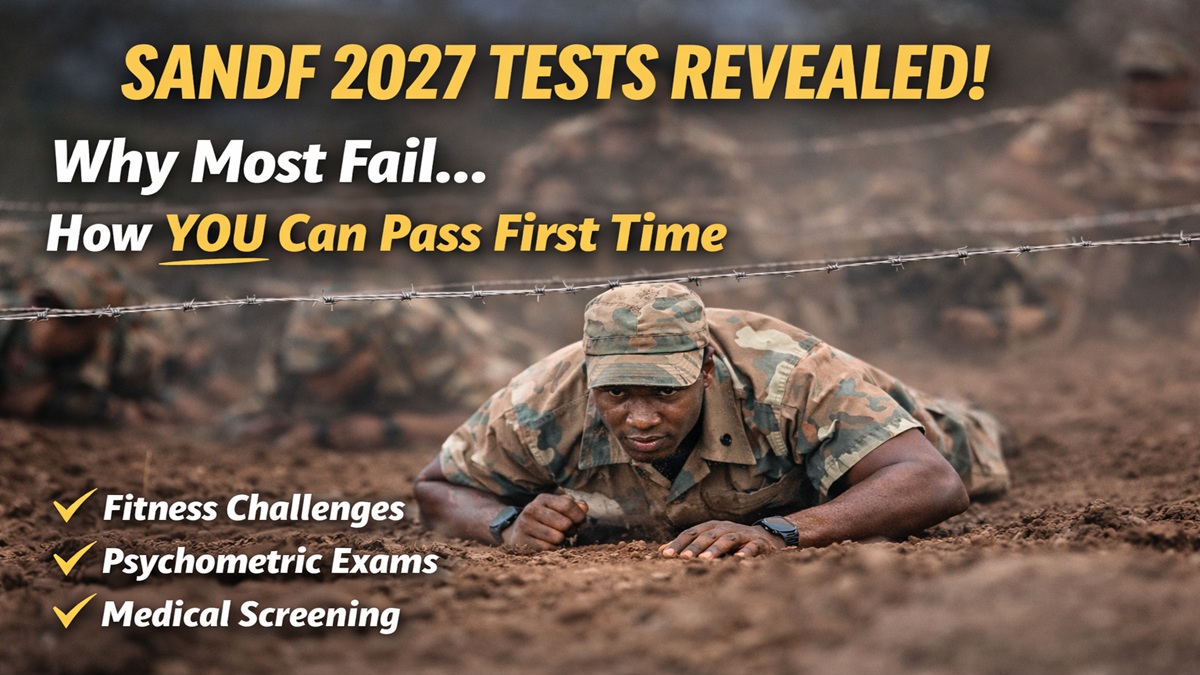
Every year, thousands of young South Africans submit their applications to join the Military Skills Development System (MSDS) under the South African National Defence Force (SANDF). Know SANDF 2027 Recruitment: Why Most Applicants Fail — And How to Pass First Time.
But here’s the truth very few people talk about:
Most applicants don’t fail because of paperwork.
They fail during testing.
The real selection does not happen when you submit your form.
It happens when you stand on the field, sit in the assessment room, and enter the medical examination unit.
That’s where preparation matters.
If you are planning to apply for SANDF 2027, this guide explains:
• Why most candidates get eliminated
• What the fitness test actually measures
• How psychometric assessments really work
• What medical screening looks for
• And how you can prepare early to pass the first time
Because in military selection, readiness beats luck every time.
→ SA Army MSDS 2027 Intake Dates
How to Apply for SANDF Recruitment 2027 (Step-by-Step Guide)
Applying for SANDF Recruitment 2027 is simple — but you must follow instructions carefully.
Many applicants get rejected not because they failed tests, but because they made mistakes during application.
Here’s how to do it properly.
Step 1: Check Basic Eligibility
Before applying, make sure you meet the general requirements:
• South African citizen (no dual citizenship for some divisions)
• Between required age limits (usually 18–22 or 26 depending on qualification)
• Grade 12 (Matric) qualification
• No serious criminal record
• Medically fit
Always confirm official requirements before submitting your form.
Step 2: Download the Official Application Form
The SANDF does not usually use online application portals.
You must:
• Download the official SANDF application form
• Or collect it from the nearest SANDF recruitment office
Never pay anyone to “secure” a form.
The process is free.
Trending Vacancies 2026 in South Africa Now →
Step 3: Complete the Form Carefully
When filling in the form:
• Use clear block letters
• Provide accurate personal details
• Double-check contact information
• Select your preferred service branch carefully
Mistakes in contact details can cost you an interview opportunity.
Step 4: Attach Required Documents
You must attach certified copies of:
• ID document
• Matric certificate
• Academic transcripts (if applicable)
• Proof of residence
• Driver’s licence (if required for certain musterings)
Documents must be certified within the required timeframe.
Step 5: Submit to the Correct Regional Office
Submit your application to the nearest SANDF recruitment office.
Applications are usually:
• Hand-delivered
OR
• Posted to the designated regional address
Late applications are not accepted.
Step 6: Wait for Shortlisting
If shortlisted, you will receive communication for:
• Fitness testing
• Psychometric assessment
• Medical screening
No response does not always mean rejection — processing takes time.
Important Application Tips
✔ Apply early
✔ Keep copies of everything
✔ Ensure your phone number is active
✔ Start preparing for fitness immediately after applying
✔ Do not wait for a response before training
What Happens After You Apply?
Shortlisted candidates will go through:
1️⃣ Physical fitness evaluation
2️⃣ Psychometric testing
3️⃣ Medical screening
4️⃣ Final selection and placement
Selection is competitive.
Preparation should begin before and continue after application.
The 3 Tests That Decide Your SANDF 2027 Recruitment Selection
Before you are accepted, you must pass three major stages:
1️⃣ Physical Fitness Test
2️⃣ Psychometric Assessment
3️⃣ Medical Examination
Fail one — and your journey stops.
There are no second chances during the same intake.
That’s why serious applicants begin preparing months before assessment day.
1️⃣ Physical Fitness Test – The First Elimination Stage
This is where many candidates underestimate the process.
They believe gym workouts are enough.
They are not.
The SANDF fitness test evaluates operational readiness — not bodybuilding performance.
What You Can Expect in the Fitness Test
Although standards may vary slightly by division, most applicants are assessed through:
• 2.4 km run
• Push-ups
• Sit-ups
• Pull-ups
• Shuttle runs
• Agility drills
• Endurance marching
The 2.4 km run is often the biggest challenge.
Running tests your:
• Cardiovascular strength
• Breathing control
• Stamina
• Mental resilience
If you struggle with endurance, this is where elimination happens.
Why Running Is the Main Filter
Many candidates lift weights but cannot sustain a steady run.
Military training requires:
• Sustained movement
• Controlled breathing
• Performance under fatigue
If you stop midway or collapse after exertion, it shows poor operational conditioning.
And that reduces your chances significantly.
What Recruiters Are Observing During Fitness
They are not just counting repetitions.
They are observing:
• Discipline
• Effort under stress
• Body control
• Recovery time
• Ability to follow commands
Your attitude during fatigue matters as much as your physical strength.
How to Prepare Properly for the Fitness Test
Start 6–12 Months Before
Do not wait for selection letters.
You should already be able to:
• Run 3–5 km comfortably
• Complete multiple push-up and sit-up sets
• Recover quickly after sprinting
Train 3–4 times weekly.
Consistency builds endurance.
Focus on Bodyweight Strength
Military assessments prioritize functional strength.
Train:
• Push-ups
• Sit-ups
• Squats
• Planks
• Pull-ups
Body control matters more than heavy lifting.
Develop Routine Discipline
Military life runs on structure.
Start waking up early.
Train at fixed times.
Build consistency into your daily schedule.
Discipline is visible long before testing day.
Avoid Last-Minute Preparation
Candidates who train only one month before assessment often face:
• Injuries
• Overtraining fatigue
• Poor stamina
• Mental burnout
Preparation must be gradual.
2️⃣ Psychometric Assessment – The Silent Eliminator
Many physically strong candidates are eliminated here.
Why?
Because the military is not only physical.
It demands psychological stability.
Psychometric tests measure:
• Logical reasoning
• Cognitive ability
• Emotional control
• Decision-making
• Leadership potential
• Response to authority
These tests do not require memorization.
They evaluate suitability.
Types of Psychometric Tests You May Face
Cognitive Reasoning Tests
These include:
• Pattern recognition
• Logical sequences
• Numerical reasoning
• Verbal comprehension
• Attention to detail
Most are timed.
Accuracy under pressure is important.
Personality Assessments
These evaluate:
• Stability
• Discipline
• Team compatibility
• Authority response
• Stress tolerance
Trying to manipulate answers often leads to inconsistencies.
Assessment systems detect contradictions.
Honesty works better than guessing what they want to hear.
Situational Judgement Tests
You may face scenarios like:
“What would you do if your superior gives strict instructions during conflict?”
These test:
• Emotional regulation
• Respect for hierarchy
• Calm decision-making
• Leadership thinking
Military environments require measured reactions.
Emotional impulsiveness can be dangerous in operational settings.
How to Prepare for Psychometric Testing
Train Your Brain
Practice:
• Logic puzzles
• Timed aptitude tests
• Memory drills
• Concentration exercises
Even 20–30 minutes daily can improve performance significantly.
Improve Emotional Control
Observe your reactions in daily life.
Do you overreact?
Do you argue with authority?
Do you struggle under pressure?
Military life demands emotional maturity.
Start building it now.
Improve Sleep and Focus
Mental sharpness depends on:
• 7–8 hours of sleep
• Balanced diet
• Low stress
A tired brain performs poorly in timed assessments.
3️⃣ Medical Screening – The Final Gate
Medical screening eliminates many candidates every year.
This stage ensures that you can safely handle:
• Intensive physical training
• Field deployment
• Long working hours
• Harsh environmental conditions
What the Medical Examination Includes
You may be evaluated for:
• Vision
• Hearing
• Blood pressure
• Heart function
• Lung capacity
• Musculoskeletal health
• Chronic illnesses
• Drug use
Drug testing is standard procedure.
Conditions That May Affect Eligibility
While final decisions are made by medical boards, common concerns include:
• Severe asthma
• Heart disease
• Untreated fractures
• Major vision problems
• Chronic illnesses requiring constant medication
The SANDF prioritizes operational reliability.
Medical stability is essential.
How to Prepare for Medical Screening
Improve Overall Health Early
Months before testing:
• Exercise consistently
• Eat balanced meals
• Reduce processed food
• Stay hydrated
Eliminate Harmful Habits
Stop:
• Smoking
• Excessive alcohol use
• Drug consumption
These habits reduce performance and can impact medical results.
Fix Health Issues in Advance
Address:
• Dental problems
• Old injuries
• Back pain
• Vision concerns
Small untreated issues can become disqualifiers.
Why Most Applicants Fail SANDF Testing
Rejections usually happen due to preventable mistakes:
• Late fitness preparation
• Ignoring endurance training
• Underestimating psychometric tests
• Poor lifestyle habits
• Lack of structured routine
• Emotional immaturity
Selection is systematic.
Prepared candidates stand out clearly.
What SANDF Recruiters Are Really Looking For
Beyond numbers and scores, recruiters observe:
• Discipline
• Respect
• Commitment
• Stability
• Team mindset
• Leadership potential
Physical strength alone does not guarantee selection.
Consistency does.
Attitude does.
Mental resilience does.
Suggested Preparation Timeline for SANDF 2027
6–12 Months Before Application
• Begin endurance training
• Improve diet
• Reduce unhealthy habits
• Build daily routine
3–6 Months Before Assessment
• Increase running intensity
• Practice timed reasoning tests
• Schedule medical checkups
• Strengthen bodyweight training
1–3 Months Before
• Maintain conditioning
• Avoid injuries
• Focus on recovery
• Organize documents
• Maintain discipline
Preparation over time produces results.
What Happens After You Pass?
Candidates who successfully pass all stages enter structured military training under the MSDS programme.
Benefits include:
• Professional military training
• Leadership development
• Career pathways
• Technical skill exposure
• Structured discipline
• Personal growth
The programme shapes character and opens long-term career opportunities.
It is not just employment.
It is transformation.
Final Advice for SANDF 2027 Applicants
If you truly want to wear the uniform in 2027, understand this clearly:
Selection begins long before assessment day.
Your preparation today determines your outcome tomorrow.
Start early.
Train consistently.
Strengthen your mind.
Improve your health.
Build discipline.
Most applicants fail because they wait.
Successful candidates prepare.
And when assessment day arrives, preparation makes the difference.
Your journey to SANDF 2027 does not start when you apply.
It starts now.

Rajani Kant
Content Writer | South Africa & Namibia
Rajani Kant is an experienced content writer with over 7 years of expertise
in covering News of South Africa, Namibia, and other African countries.
He focuses on Entertainment news government vacancies news,
grants, scholarships, and public service updates, strictly based on
official and verified government sources.
Professional Experience & Expertise
- 7+ years of experience in Africa-focused digital journalism
- Expert in South Africa & Namibia news updates
- Regular coverage of all kind of news
Connect with Rajani Kant
Editorial Policy:
All content is written using official government sources and verified public information,
with a focus on accuracy, clarity, and public benefit.